RCS vs WhatsApp: Which is Better for Business Messaging?
A customer messages your business and expects more than plain text back — images, buttons, a reply that actually looks like it came from a real company. Two channels now deliver that experience without SMS's old workarounds: RCS Business Messaging and the WhatsApp Business API. The real question for most Indian businesses isn't which one is "better" in the abstract — it's which one fits their audience, their budget, and their compliance obligations.
Both channels sit on completely different infrastructure, reach different slices of your customer base, and carry different registration requirements under India's DLT framework and TRAI's messaging rules. Picking the wrong one — or picking only one — usually shows up later as lower delivery rates or a message that never reaches a phone at all.
A2ZSMS runs SMS, RCS, WhatsApp and Voice from a single DLT-compliant dashboard, so this comparison isn't written to push you toward one channel. It's meant to help you decide where RCS fits, where WhatsApp fits, and where running both makes more sense than picking a side.
What Is RCS Business Messaging?
RCS (Rich Communication Services) is the open messaging standard, managed by the GSMA, that runs inside a phone's default messaging app — no separate download required. Google drives most of the adoption on Android through RCS Business Messaging (RBM), and recent iOS updates have started extending RCS support to iPhone users too, though Apple's implementation doesn't yet match Android's full feature set.
Reach is the catch. RCS Business Messaging is well established in markets like the US, UK and parts of Europe, but carrier-level support in India — through networks like Jio and Airtel — is still catching up to WhatsApp's near-universal presence on Indian phones. That gap is closing, but it's real enough that RCS shouldn't be treated as a guaranteed-reach channel in India just yet.
What Is the WhatsApp Business API?
The WhatsApp Business API is the programmatic layer Meta built for businesses that need to send messages at scale — distinct from the free consumer WhatsApp app most people already have installed. In a country where WhatsApp is already the default way people communicate, that installed base isn't a barrier — it's an advantage. Your customer almost certainly already has the app open.
How RCS and WhatsApp Business API Compare on Core Features
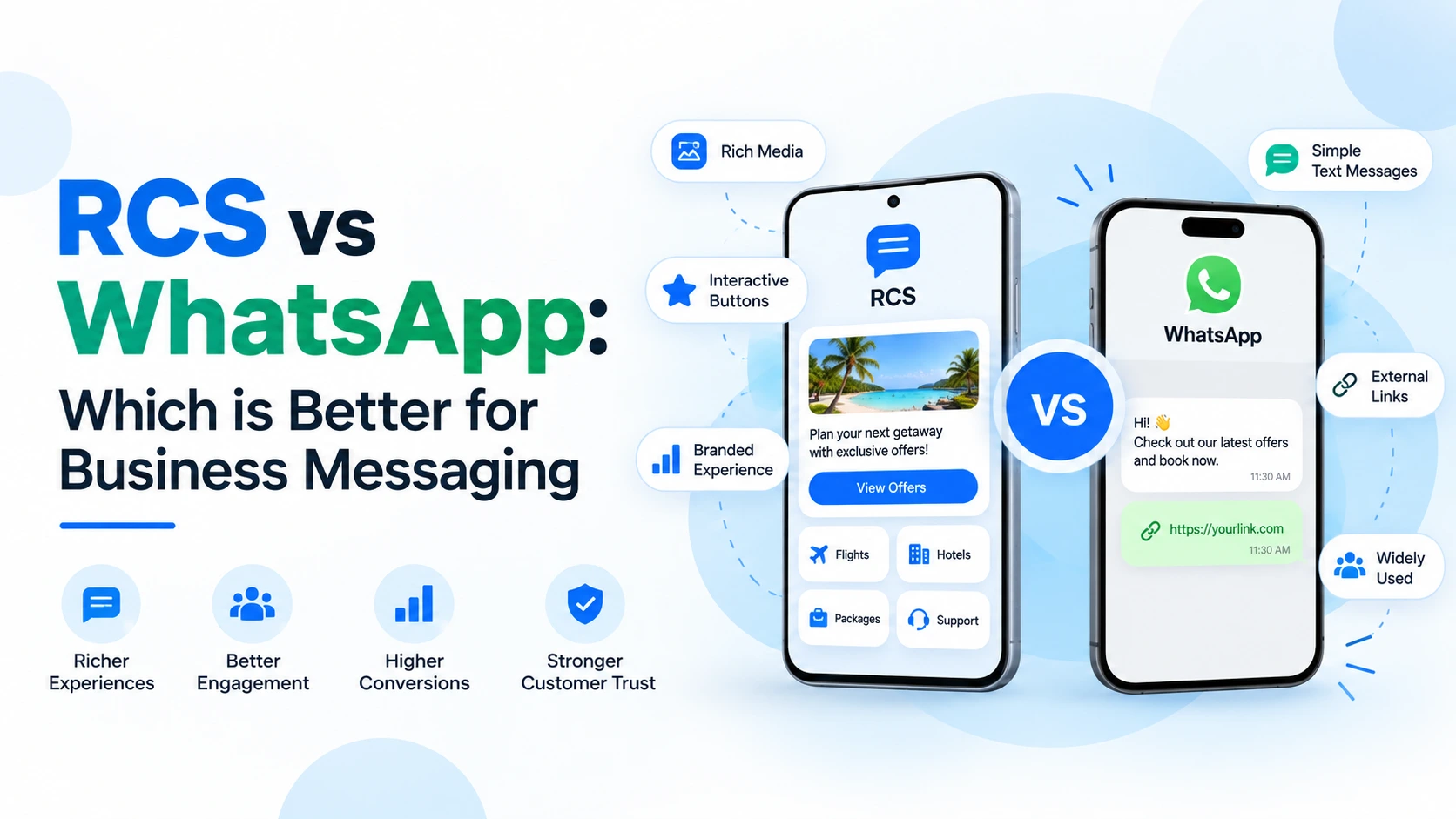
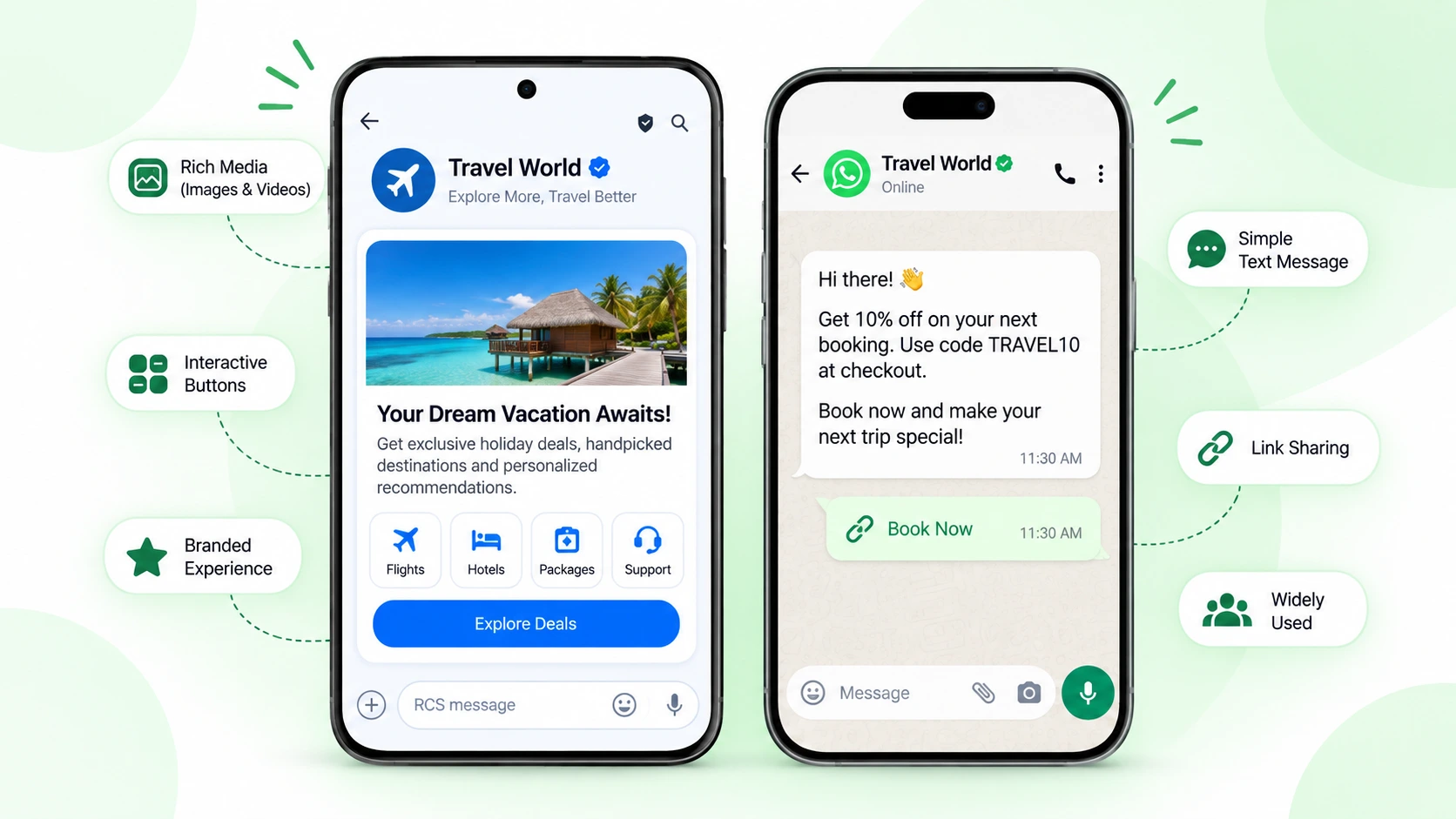
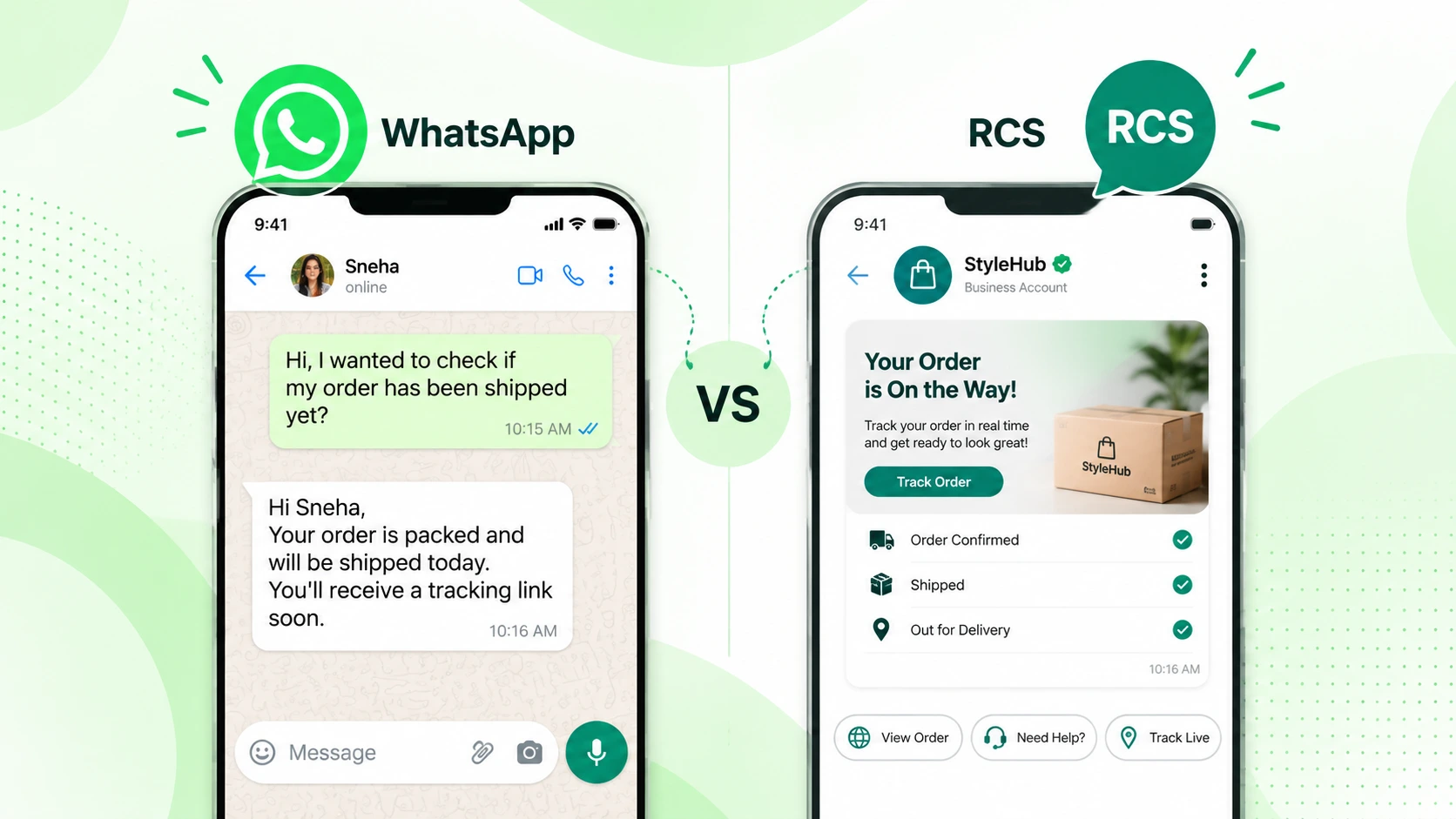
Laid out side by side, the two channels look similar on the surface — both offer rich media, verified senders and interactive elements. The differences that actually matter for a business sit underneath that surface.
| Feature | RCS Business Messaging | WhatsApp Business API |
|---|---|---|
| Standard / Ownership | Open standard (GSMA) | Proprietary (Meta) |
| App Install Required | No — native messaging app | Yes — WhatsApp app |
| Encryption | Varies by device and carrier | End-to-end, always on |
| Regulatory Oversight in India | TRAI + carrier-level rules | TRAI DLT + Meta's own policy layer |
| Verified Sender Profile | Yes | Yes |
| Rich Media & Interactive Buttons | Yes | Yes |
| Voice / Video Calling | No | Yes |
| Typical Reach in India Today | Still developing | Near-universal |
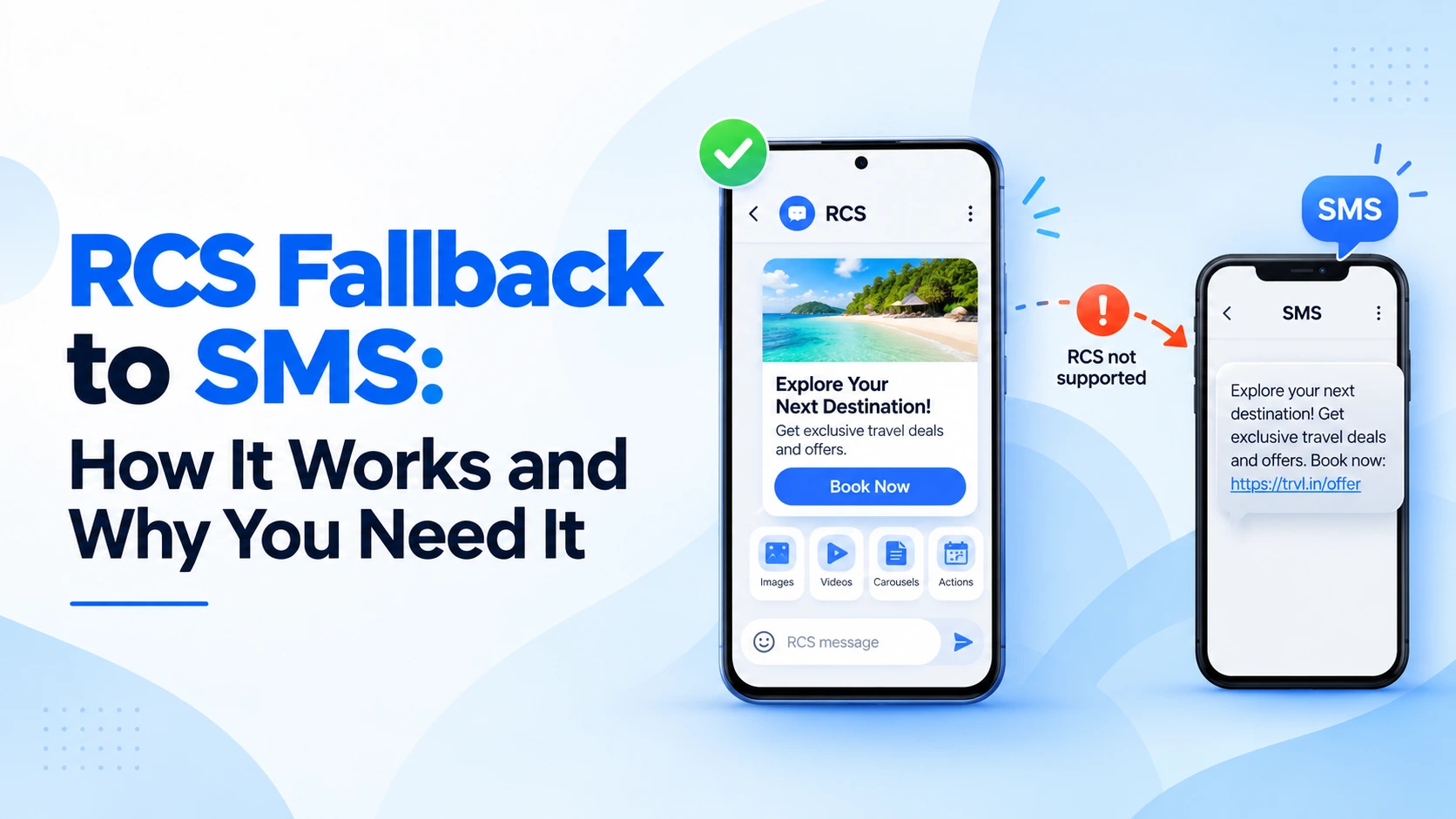
| Fallback if Unavailable | Falls back to SMS | No built-in fallback |
The fallback row is easy to overlook but matters in practice — a failed RCS send can drop straight to SMS on the same request, while a failed WhatsApp Business API send typically needs a separate channel triggered manually or through automation rules.
Do RCS and WhatsApp Run on the Same Technology?
No — and this trips up more people than you'd expect. RCS is carrier-and-device infrastructure standardised by the GSMA; WhatsApp runs entirely on Meta's own proprietary servers and protocol. A message sent through one has no path into the other. There's no interoperability, no shared inbox at the protocol level, and no way to reach a WhatsApp user through an RCS send or vice versa. Each channel needs its own integration, its own templates, and — in India — its own compliance checks.
Cost and Reach: RCS Business Messaging vs WhatsApp API in India
Cost is where the two channels diverge most for high-volume senders. Businesses running both side by side typically find RCS Business Messaging costs meaningfully less per message than WhatsApp Business API conversations in India — the exact gap depends on message category, volume and your provider's rate card, so it's worth getting a real quote rather than budgeting off a general estimate.
Reach tells a different story. Independent industry surveys consistently show WhatsApp still commands far higher consumer preference in India than RCS, even though RCS preference has been growing faster than almost any other channel in recent years. For most Indian businesses today, that means the WhatsApp Business API delivers broader reach right now, while RCS Business Messaging offers a lower-cost, fast-growing complement rather than a like-for-like replacement.
| Consideration | RCS Business Messaging | WhatsApp Business API |
|---|---|---|
| Typical Cost per Message in India | Generally lower | Generally higher |
| Current Consumer Reach in India | Growing, carrier-dependent | Near-universal |
| Best Fit For | High-volume transactional alerts | Ongoing conversational engagement |
| Adoption Trend in India | Fast-growing | Already dominant, stable |
DLT and TRAI Rules for RCS and WhatsApp Business Messaging
Neither channel is exempt from India's messaging regulations just because they're richer than plain SMS. TRAI's DLT framework governs any commercial A2P messaging sent to Indian numbers, and that includes RCS Business Messaging alongside SMS. WhatsApp Business API senders sit under a parallel set of rules — Meta's own opt-in and template policies — on top of standard Indian data-handling expectations.
Choosing Between RCS, WhatsApp, or Both for Your Business
There's no single right answer here — the right mix depends on where your customers already are and what you're trying to send them.
Consider RCS Business Messaging when:
Consider the WhatsApp Business API when:
Use both when:
What to Check Before Choosing an RCS and WhatsApp Messaging Partner
The channel decision is only half the work — the provider you choose determines whether either channel actually performs the way this comparison assumes it will.
Why Businesses Choose A2ZSMS for RCS and WhatsApp Messaging
A2ZSMS was built around the idea that RCS, WhatsApp, SMS and Voice shouldn't need four separate logins, four separate compliance processes and four separate invoices.
Talk to a Reliable RCS and WhatsApp Messaging Partner in India
Whether you're weighing RCS Business Messaging against the WhatsApp Business API for the first time, or replacing a setup that isn't delivering, A2ZSMS gives you both channels — plus SMS and Voice — on one DLT-compliant platform with transparent INR pricing.
Conclusion
RCS Business Messaging and the WhatsApp Business API solve different problems, not the same problem twice. RCS tends to win on cost and branded, app-free reach for transactional sends; WhatsApp tends to win on reach and ongoing conversational engagement, especially in a market where it's already the default. Compliance sits underneath both — DLT registration, template approval and consent rules apply regardless of which channel carries the message.
For most Indian businesses, the decision isn't RCS instead of WhatsApp — it's which mix of the two, backed by a partner that keeps both DLT-compliant, cleanly priced and properly reported. A2ZSMS brings RCS, WhatsApp, SMS and Voice together on one dashboard, so that decision doesn't need to happen twice.