RCS Fallback to SMS: How It Works and Why You Need It
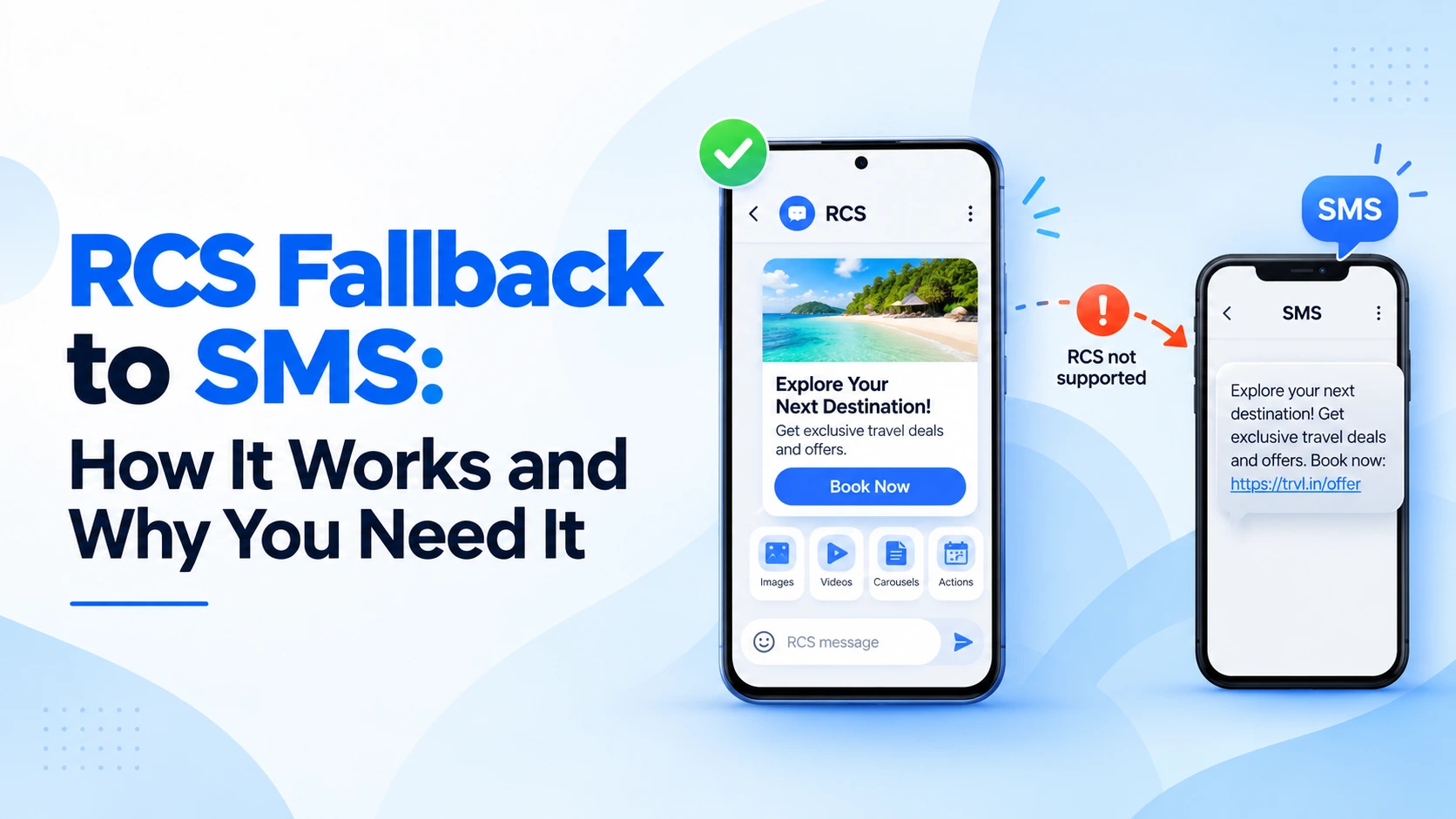
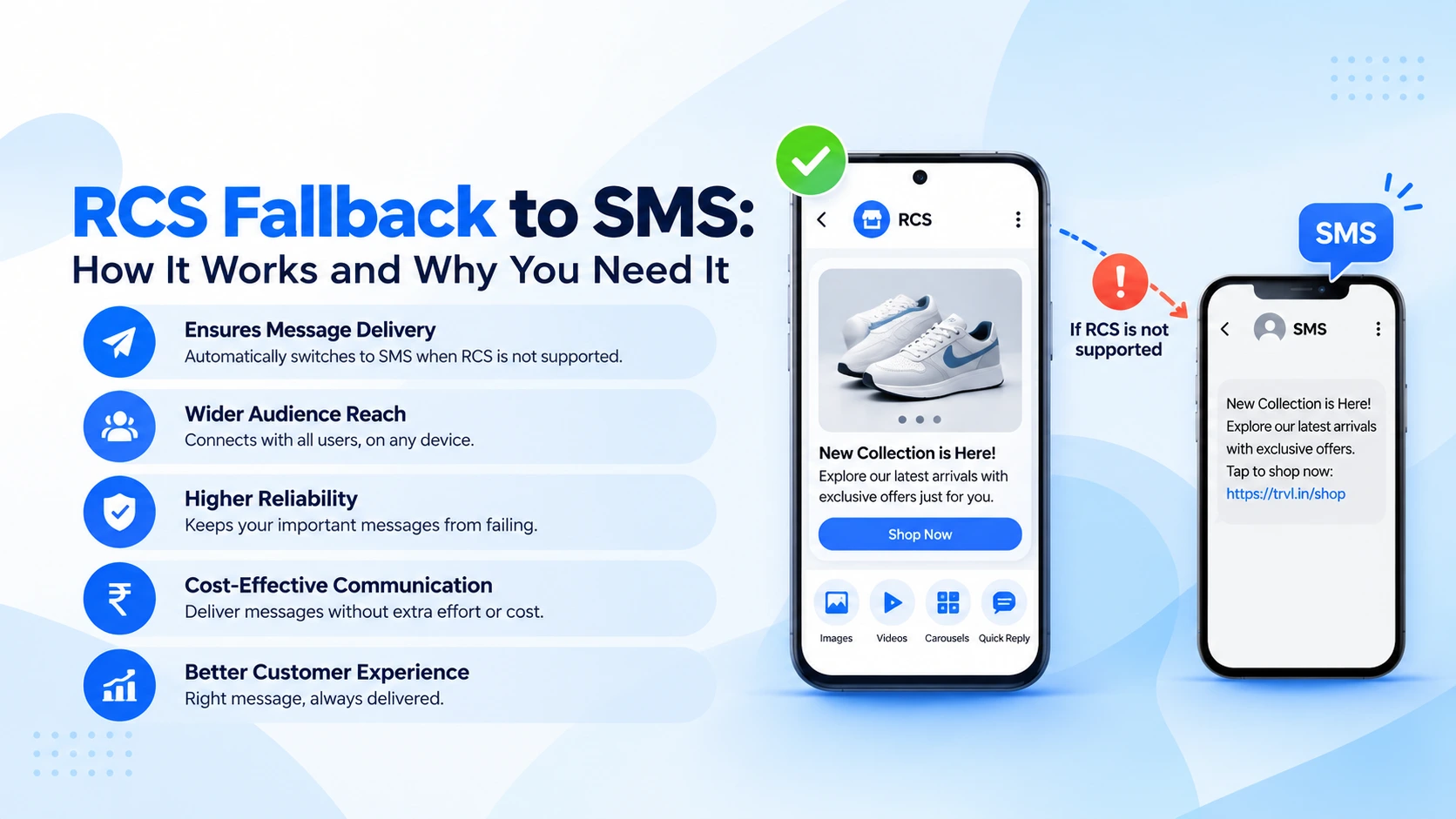
RCS fallback to SMS is the safety net that makes sure a business message still reaches a customer when their phone can't display RCS. The platform first tries to deliver a rich RCS message. If the device, app or network can't receive it, the same communication goes out as a plain SMS instead, so no customer is left out and no campaign quietly fails.
This guide explains how RCS business messaging and SMS work together, what happens behind the scenes, where DLT rules apply in India, and what to check before you set it up. A2ZSMS runs RCS, SMS, WhatsApp and Voice from one platform, so the examples below reflect how real multi-channel campaigns are planned.
What Is RCS Business Messaging, and Where Does SMS Fit?
RCS business messaging lets brands send app-like messages — images, carousels, buttons and suggested replies — straight into a customer's default messaging app, with a verified sender name and logo on top. It is built on the Rich Communication Services standard and reaches businesses through platforms such as Google's RCS Business Messaging (RBM). Think of it as the upgrade path for plain text.
SMS sits at the other end of the spectrum. It is plain text, it works on virtually every handset, and it travels over the cellular network without needing a data connection. Those traits make it the natural backup. Used together, RCS gives you richness where it is supported and SMS gives you reach where it isn't, which is why a good setup treats them as one flow rather than two separate campaigns. You can explore each channel on the RCS Business Messaging and Bulk SMS services pages.
How Automatic SMS Fallback Works, Step by Step
So how does RCS fallback to SMS work in practice? The routing logic runs inside your messaging platform, not on the customer's phone, and it follows the same decision path for every recipient on your list. Four stages make up that path.
Step One: The RCS Capability Check
Before a message goes out, the platform checks whether the recipient can receive RCS at all, meaning whether their phone, messaging app and operator support it. This RCS capability check splits one contact list into RCS-enabled devices and non-RCS devices without any manual sorting. Some providers skip the lookup and attempt RCS first, so ask which approach yours uses.
Step Two: The Delivery Attempt and Fallback Timer
If the number is RCS-reachable, the message is sent as RCS and the platform waits for a delivery signal. If none arrives before the fallback timer runs out, the message is treated as undelivered. A short timer protects urgent alerts but raises the chance of a late RCS delivery overlapping with the SMS, while a long timer delays everything. Pick a value that matches how urgent the message really is.
Step Three: The Switch to SMS
So what happens when an RCS message fails? The routing logic sends the SMS version instead. This is a separate message with its own rules: plain text only, and in India it must use a DLT-approved template and a registered sender ID. To the customer it simply looks like a normal text from your brand.
Step Four: Reporting on Both Channels
Good delivery failure handling doesn't end at the switch. Delivery reports should show which channel actually reached each customer, with read receipts where RCS provides them and standard delivery status for SMS. When both channels appear in a single dashboard, you can see exactly where messages are being lost and adjust the flow.
Why Some Phones Can't Receive RCS Messages
RCS reach is not universal, and any honest plan for RCS starts there. Whether a message can be delivered as RCS depends on a combination of device, app, connection and operator. That is why fallback is part of the design rather than an optional extra.
The Device and Messaging App
In India, RCS typically reaches Android users through Google Messages or a manufacturer app that supports it. Older handsets, feature phones, devices with RCS switched off and phones using a different default messaging app won't receive it. Android and iOS support also differs and keeps changing, so check the current position for your own audience.
Data Connection and Network
RCS travels over mobile data or Wi-Fi, while SMS uses the cellular signal alone. If a customer's phone is offline, has data switched off or sits in a weak coverage area, an RCS message can't be delivered even when the phone is fully capable. SMS often still gets through in exactly those moments.
Operator and Region
Operator and carrier support varies from one network and region to the next. A customer list covering Bangalore, smaller towns and rural areas will almost always include a mix of RCS-enabled and non-RCS devices, which is why RCS message delivery on non-RCS phones needs a plan before you send, not after.
So what happens if RCS is not supported? Without fallback, nothing useful reaches the customer. With fallback, they receive the SMS version. That is also the answer to a common question about how to reach Android users who don't have RCS enabled: you don't force RCS on them, you deliver the same message as text.
Why Businesses Need RCS Messaging Fallback
Without a backup path, every unreachable number is a lost message, and often a silent one, because nothing tells you it never arrived. RCS fallback to SMS closes that gap without asking your team to run two separate campaigns.
Why Every Customer on Your List Gets the Message
So why do businesses need RCS fallback to SMS? Because RCS messaging reaches only the customers whose device, app and network support it. Your RCS to SMS fallback delivery rate is the share of recipients who receive the message on at least one channel, and fallback is what lifts that figure beyond RCS-enabled phones alone. The result is a consistent experience for the whole list, not just part of it.
Time-Sensitive Alerts Can't Wait
Payment reminders, delivery updates and appointment confirmations lose value quickly. If an RCS message gets stuck, the customer needs the information through another route before it goes stale. Fallback gives time-sensitive alerts that second route automatically, and it fits naturally into wider multi-channel messaging that may also include the WhatsApp Business API or voice.
It also keeps reporting tidy. One campaign, one set of delivery reports and one dashboard make results far easier to explain to your team, which is a quiet but real benefit of omnichannel communication.
Designing the SMS Version of Your Rich Message
SMS fallback for RCS is not a copy-and-paste job. A rich card with an image, a title and three buttons has no direct SMS equivalent, so the text version should be planned at the same time as the RCS design, not after it.
| Element | RCS Message | SMS Fallback |
|---|---|---|
| Format | Rich cards, images and carousels | Plain text, with a short link where needed |
| Sender Identity | Verified sender name and logo | DLT-registered sender ID (header) |
| Calls to Action | Buttons and suggested replies | A short link or a reply keyword |
| Content Approval | Brand verification and message review through your RCS provider | DLT-approved content template |
| Delivery Signals | Delivered and read status where the recipient allows it | Delivery report, no read receipts |
Here is an illustrative example. An order-update RCS message might show a product image, the line Your order is out for delivery and a Track Order button. The SMS fallback carries the same information in one short line: the order reference, the delivery status and a short tracking link, written to fit the template your DLT registration approved.
Keep the SMS lean. A single SMS segment holds 160 characters in standard encoding and fewer when the text includes regional-language characters, and longer messages are split into several segments. Lead with the key information, keep any link short and leave out anything that only made sense next to a button.
RCS Fallback in India: DLT, TRAI and Sender ID Rules
The SMS you send as a fallback is ordinary application-to-person (A2P) SMS, so it follows the same rules as any other business text under TRAI regulations. That means RCS fallback to SMS for businesses in India has two moving parts to get right: your RCS setup and your DLT setup.
RCS business messaging has its own sender verification and message review through your provider, so confirm which approvals apply to your account. Handle customer numbers in line with India's Digital Personal Data Protection (DPDP) Act as well. Rules and processes change, so check current requirements on the TRAI website or with your provider before launch.
Real-World Use Cases for Fallback Messaging
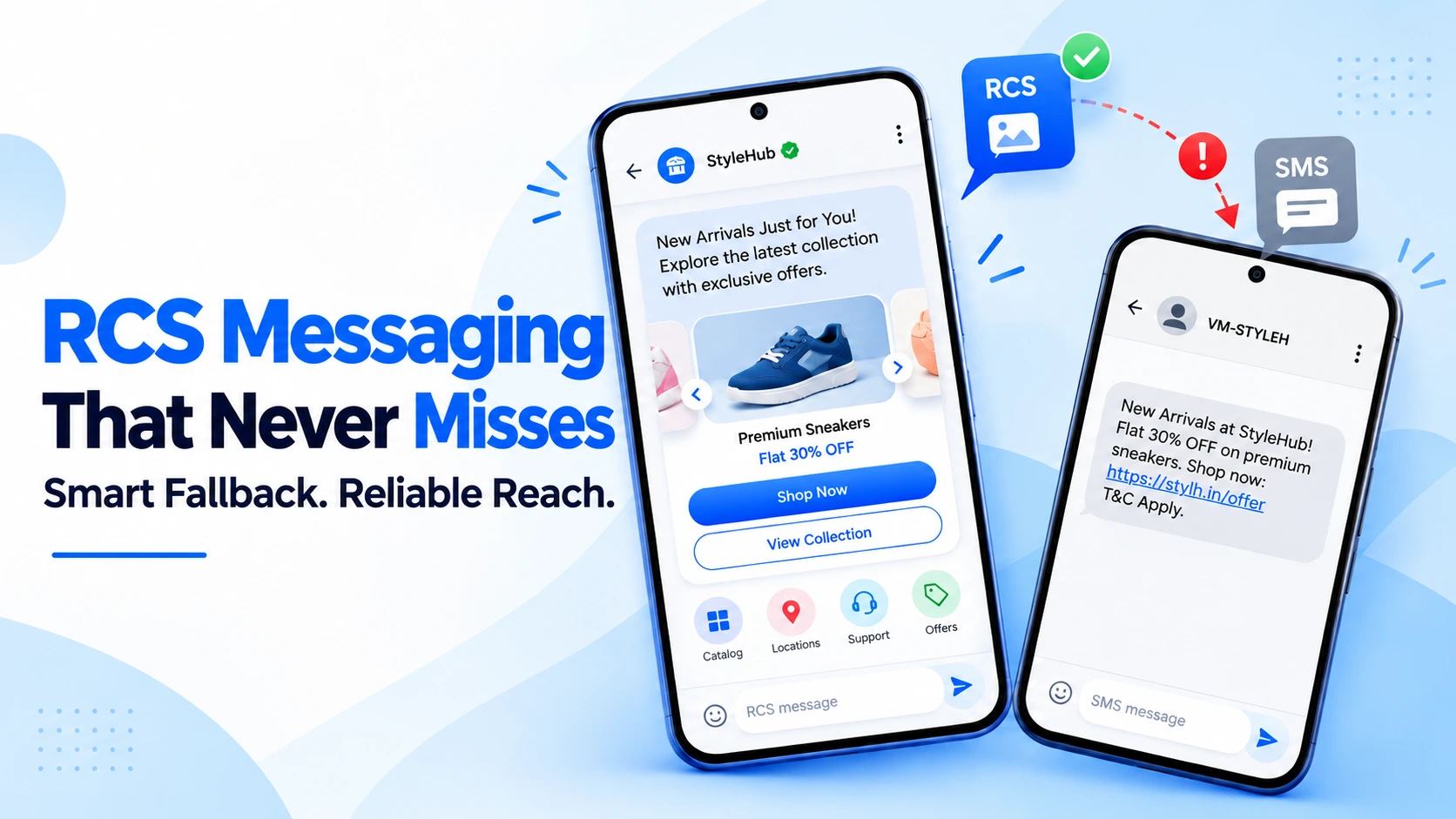
Fallback earns its place wherever a missed message has a cost. These are the situations where it matters most.
Banking and Payments
- Payment due reminders with an RCS pay button and an SMS pay link
- Transaction and policy-renewal alerts that must reach every customer
- Alerts handled with the same data care your compliance team applies elsewhere
E-commerce and Delivery
- Order confirmations and out-for-delivery updates
- Cash-on-delivery confirmation before dispatch
- Cart reminders using an RCS carousel where supported, and plain text for everyone else
Travel and Ticketing
- Booking confirmations and check-in reminders
- Itinerary and schedule changes that can't wait
- Post-trip feedback requests with a tap-to-rate card where RCS is available
Healthcare and Education
- Appointment and follow-up reminders
- Fee reminders and class schedule changes
- Event and exam notices that reach parents and students on any handset
How to Set Up RCS with SMS Fallback Through an RCS API
How to set up RCS fallback to SMS depends on your team. Non-technical teams usually work from a dashboard, while developers connect through a messaging API. RCS fallback to SMS using an API generally means one request that carries the RCS content and the SMS text, with the platform handling the routing between them.
- Complete DLT registration for SMS — register your entity, then get your sender ID header and content templates approved.
- Set up your RCS sender — complete brand verification through your provider so customers see a verified profile.
- Build the RCS message — cards, images, buttons and suggested replies for customers whose phones support them.
- Write the SMS fallback text — match it to an approved DLT template and pair it with the RCS message it backs up.
- Set your fallback rules — decide the trigger conditions and the fallback timer based on how urgent the message is.
- Test on both device types — send to an RCS-enabled phone and a non-RCS phone, check the delivery reports, then launch.
On A2ZSMS, RCS, SMS, WhatsApp and Voice sit in one dashboard, so contact lists, templates and delivery reports stay in one place instead of being rebuilt for each channel. Exact fallback options such as timers, triggers and reporting depend on your plan and configuration, so confirm them with the team during onboarding.
Questions to Ask Before You Choose a Provider
Choosing the best RCS provider with SMS fallback in India comes down to how well the provider handles the details, not just whether the feature exists. These questions separate a basic setup from a dependable one.
Common Setup Mistakes and How to Avoid Them
Most fallback problems come from small oversights during setup rather than from the technology itself. These are the ones worth checking first.
Talk to A2ZSMS About Your RCS Campaigns
Whether you are launching your first RCS campaign or fixing delivery gaps in an existing one, A2ZSMS gives you RCS, SMS, WhatsApp and Voice on one DLT-compliant platform with automatic SMS fallback options to match your plan. Conversations that convert start with reaching every customer on your list.
Conclusion
RCS gives businesses a richer way to talk to customers, but it only reaches phones that support it. Fallback is the piece that makes the channel dependable: the platform checks reachability, tries RCS first and switches to SMS when it has to, so the message still arrives.
Plan the SMS version early, get your DLT template and sender ID approved, set a fallback timer that fits the urgency of the message and test on both device types. With those basics in place, A2ZSMS helps you run RCS, SMS and WhatsApp as one connected flow, so the rich experience reaches everyone it can and the text version covers everyone else.
Related reading: RCS vs WhatsApp for business messaging and how an SMS API works.